
In the commercial baking industry, the proofer is the most critical piece of equipment in the early stages of bread making. If there are issues with the temperature accuracy during proofing, it can lead to significant internal differences within the dough, potentially causing the entire batch to fail and wasting expensive ingredients.
How can you identify and select a commercial unit that provides a perfect, uniform proofing environment? This article offers a professional purchasing guide covering three dimensions: core technology, structural design, and purchasing details.
I. Causes of Uneven Fermentation
The most common cause of uneven dough fermentation is a temperature and humidity gradient within the proofer cabinet.
- Air Duct Design Flaws: Hot and humid airflows are not adequately dispersed to every corner of the cabinet.
- Sensor Blind Spots: Temperature and humidity sensors fail to accurately capture the actual average temperature and humidity inside the cabinet.
- Poor Sealing: The equipment cabinet leaks air, allowing external air to intrude and interfere with the normal proofing temperature.
II. Factors to Consider When Selecting a Commercial Proofer with Precise Temperature Control
1. The Foundation of Precise Temperature Control: The Control System
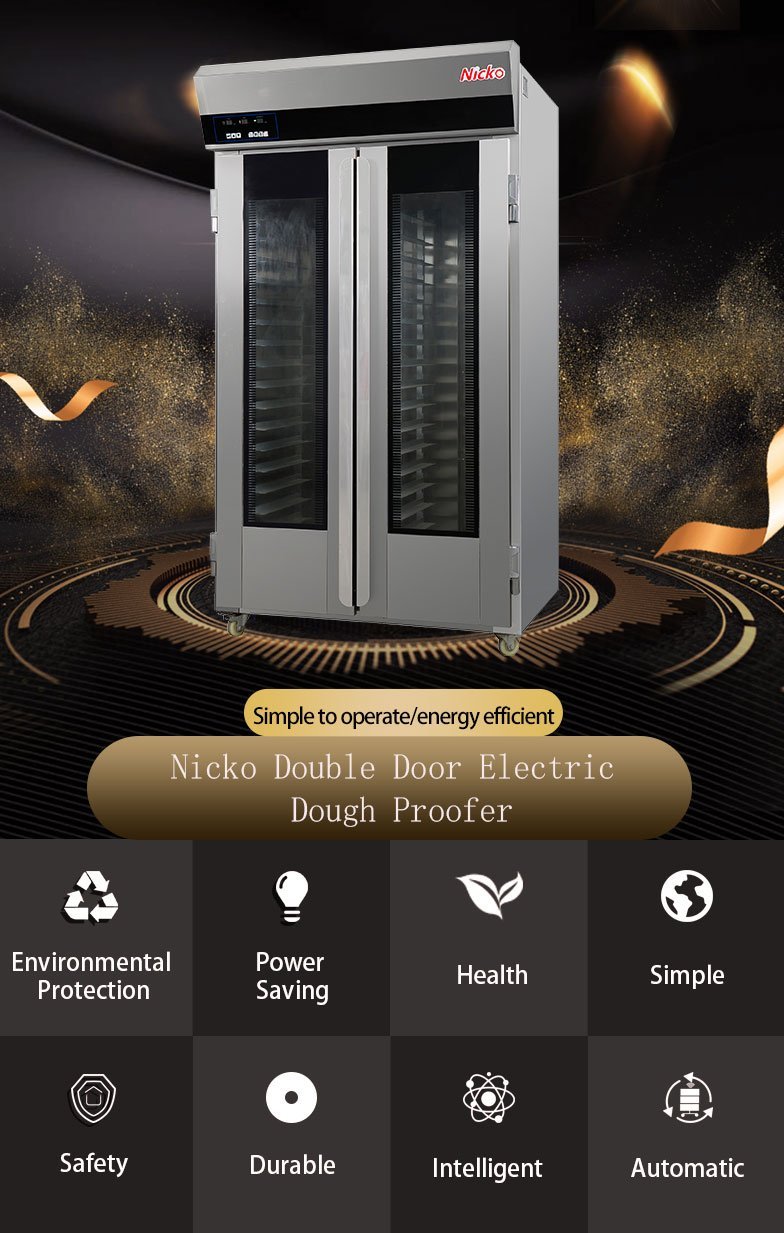
When selecting a commercial proofer for precise temperature control, the internal core components are essential. Taking the Nicko Double Door Electric Dough Proofer as an example, its control panel uses electronic components from a large European brand, which helps ensure temperature accuracy and minimizes errors.
Nicko Double Door Electric Dough Proofer: https://www.nicko.com.cn/product/nicko-double-door-electric-dough-proofer/
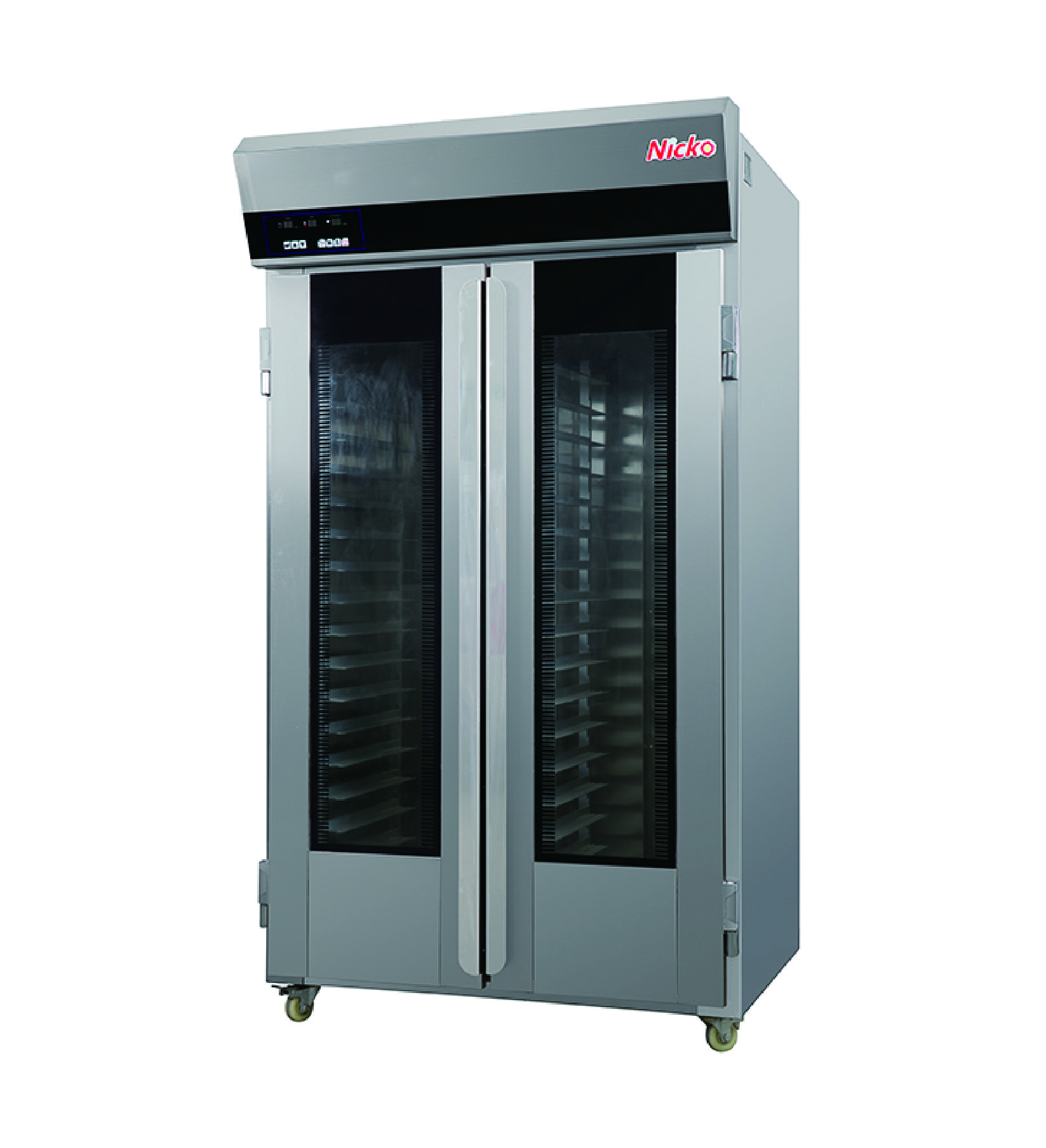
In professional baking, the Nicko Double Door Electric Dough Proofer employs a Smart Digital Temperature Control System that can actively and instantly adjust heating power, keeping temperature fluctuations within a very narrow range.
2. Reliable Humidification Technology
If the humidity inside the proofer is uneven, it directly affects whether the dough forms a “skin” (crust). It is recommended to choose equipment with a professional humidification function that can generate uniform water molecules to quickly fill the entire cabinet.
For example, the Nicko Double Door Electric Dough Proofer(https://www.nicko.com.cn/product/nicko-double-door-electric-dough-proofer/) features international leading humidity control technology. This suggests it can provide an excellent proofing environment for bread fermentation.
3. Easy Cleaning and Maintenance is Better Suited for Commercial Baking
The commercial baking environment requires a significant amount of labor for daily cleaning and maintenance. Therefore, 304 stainless steel has become the most mainstream material for commercial baking equipment. Furthermore, this material is less likely to harbor bacteria, ensuring food compliance with health standards in your region.
The Nicko Double Door Electric Dough Proofer features an imported 304 stainless steel interior for durability and easy cleaning. Additionally, it is designed with a large glass door for easy observation, aiding the baker in process management.
III. Precautions When Selecting a Commercial Proofer with Precise Temperature Control
Here are some pitfalls to avoid when purchasing, each summarized in one sentence:
- Avoid proofers with only bottom heating, as this inevitably causes significant top-to-bottom temperature differences.
- Do not select equipment with open water pan humidification, which is prone to uneven humidity and bacterial growth.
- Inquire about the number and placement of sensors; a single temperature probe cannot represent the true average temperature of a large cabinet.
- Do not overlook the quality of the door seals, as poor seals lead to air/heat leaks that destabilize proofing.
- Avoid models with thin or low-density insulation, as they consume more energy and are easily affected by ambient temperature.
- Always request the temperature and humidity distribution report from the supplier before purchasing.
- For large models, ensure the design of the shelf spacing is reasonable to avoid dough trays obstructing proper airflow circulation.