
In traditional baking workflows, proofing often seems like a simple process of “heating and humidifying.” However, as the food industry evolves, the fermentation stage has become the definitive link for production success.
In the era of modern large-scale food production, a critical piece of equipment—the Bread Proofer Room—determines the texture, flavor, and overall success rate of the bake.
What makes a Bread Proofer Room truly efficient? This 2026 Bakery Equipment Procurement Guide outlines the key indicators for sourcing this equipment, providing you with the most essential guidance.
1. Core Technical Indicators for Industrial Proofer Rooms
Beyond basic parameters, selection in 2026 should prioritize the following three technical aspects:
1. Internal Relative Humidity (RH) Uniformity
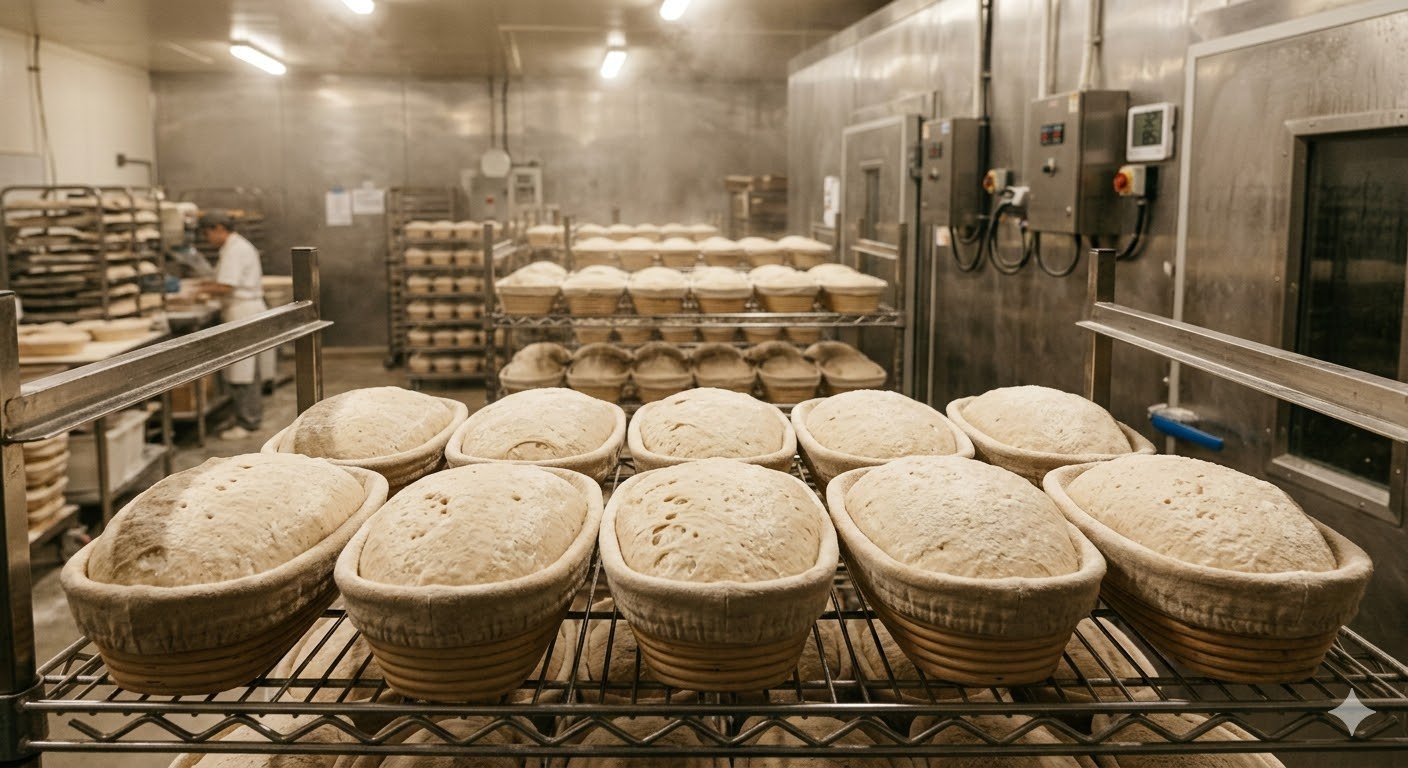
The RH deviation in every corner of the proofer should not exceed ±2%. This is generally determined by the internal circulation air duct design and airflow engineering.
2. Steam Recovery Rate
When large batches of frozen dough enter the proofer simultaneously, temperature and humidity levels typically plummet. A high-performance steam generator is required to quickly restore the ideal environment. The heating power must be sufficient to regain control within the critical 60-second window.
3. Condensate Management
In high-humidity environments, condensation dripping from the ceiling can ruin the dough’s surface. Premium proofing equipment features ceiling condensate recovery troughs and forced-air pre-condensation treatment devices.
2. Workflow Synergy with Rotary Ovens
Since the Proofer Room and the Rotary Oven exist on the same production line, it is highly recommended to purchase both from the same manufacturer or ensure strict dimensional alignment. The track width of the proofer must perfectly match your Rotary Oven racks to eliminate manual interruptions or the need for reloading tools during transfer.
Comparison of Industrial Proofer Types
| Type | Core Features | Advantages | Disadvantages | Best Use Case |
| Roll-in | Accommodates entire racks | Reduces handling; easy operation | Moderate space efficiency | Mid-to-large bakeries/factories |
| Cabinet | Fixed tray/grid structure | Precise control; small footprint | Limited capacity; manual loading | Small bakeries; R&D labs |
| Tunnel | Continuous conveyor belt | High automation; massive output | High cost; large footprint | Large-scale automated lines |
| Retarder | Refrigeration + Heating | Flexible timing; scheduled proofing | Higher price and energy consumption | Pre-prepared stock; night proofing |
| Spiral | Vertical spiral track | Saves floor space; long path | Complex; high maintenance | High-output plants with limited space |
3. 2026 Procurement Advice: Industrial Audit Checklist
When consulting with suppliers, request a comparison of the following metrics:
| Dimension | Industrial Standard (Requirement) | Common Pain Points (To Avoid) |
| Temp. Accuracy | ±0.5°C | Large fluctuations causing uneven fermentation |
| Humidity Range | 70% – 95% RH | Localized “wet spots” causing dough sticking |
| Insulation Thickness | ≥75mm (Polyurethane Foam) | High heat loss and extreme energy costs |
| Material Quality | 304 Food-Grade Stainless Steel | Non-stainless materials prone to rust/difficult cleaning |
4. High ROI Proofer Reviews
To help you make an informed purchase, we have evaluated the following products based on the core indicators mentioned above:
Product A: Nicko Double Door Electric Dough Proofer
Does it meet high-efficiency standards? Strengths:
- Durability: Built with imported 304 stainless steel, which extends the asset’s lifespan in high-humidity (70%-95% RH) environments while ensuring hygiene.
- Stability: The control panel utilizes advanced imported electronic components to minimize fluctuations during the proofing cycle.
- Visibility: The large glass door design allows QC personnel to conduct real-time inspections safely, reducing heat loss from unnecessary door openings.
Product B: Nicko’s Retarder Proofer
Expert Evaluation:
- Flexibility: The core advantage lies in the “R” (Retarding) and “F” (Freezing) modes. By utilizing a low-temperature environment, bakers can prepare dough days in advance, eliminating the need for midnight shifts in central kitchens.
- PID Precision: This is not just a heater; it features a powerful refrigeration system. You can schedule the ramp-up for 4:00 AM, ensuring the dough is in optimal condition for the oven by 7:00 AM.
- Surface Protection: Integrated with hot air circulation, the automated humidity system ensures the dough surface does not crack during long-term low-temperature storage.