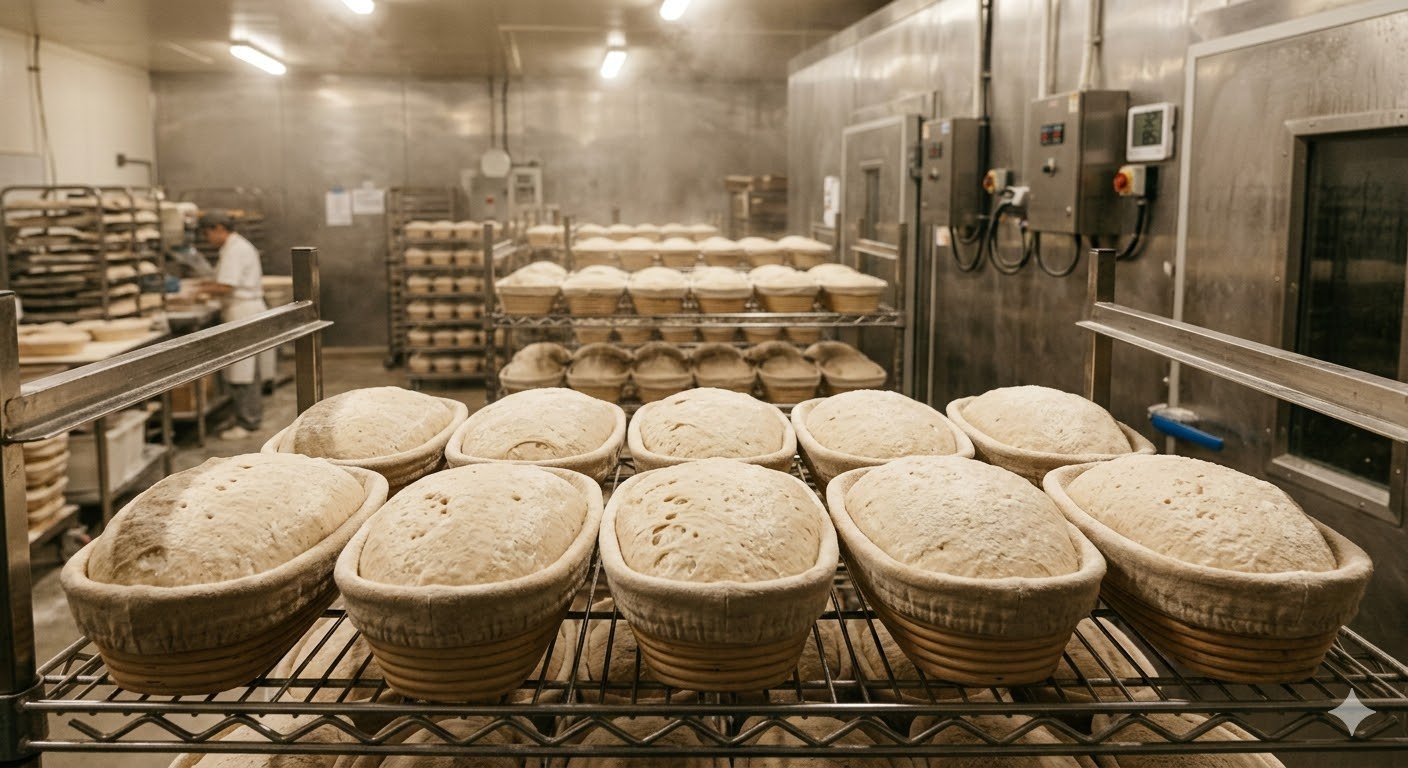
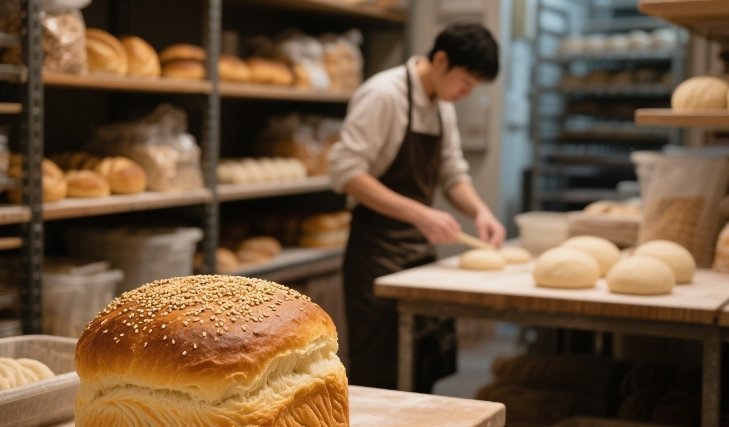

Unlike small-scale artisan bakeries, large-scale enterprises—such as industrial bakeries and central kitchens—prioritize volume, efficiency, and labor costs above all else.
The key to success in these environments is the procurement of baking equipment capable of producing high-volume products to professional standards. So, which type of oven should you invest in? Let’s start with a comparative overview:
| Oven Type | Working Principle | Core Advantage | Best Commercial Use |
| Deck Oven | Static radiant heat + stone sole | Superior crust texture, precise temperature control | High-end artisan bread, boutique bakeries |
| Rotary Oven | Forced convection + rotation | Massive output, highly consistent results | Industrial bakeries, central kitchens, toast processing |
| Convection Oven | High-velocity hot air circulation | Rapid heating, compact and flexible | Semi-finished products, cookies, pastries, frozen dough |
| Tunnel Oven | Automated conveyor belt | Unmanned production line, massive capacity | Ultra-large scale mass production (e.g., supermarket bread) |
| Combi Oven | Hot air + steam regulation | Multi-functional, handles both cooking and baking | Chain restaurants, hotel kitchens, integrated central kitchens |
Why is the Rotary Oven the best choice for Industrial Bakeries & Central Kitchens?
As the comparison table illustrates, the Rotary Oven is the ideal choice. Its characteristics are purpose-built for industrial-scale production:
1. Maximum Baking Throughput
Unlike boutique positioning, industrial production prioritizes efficiency—ensuring maximum output per unit of time.
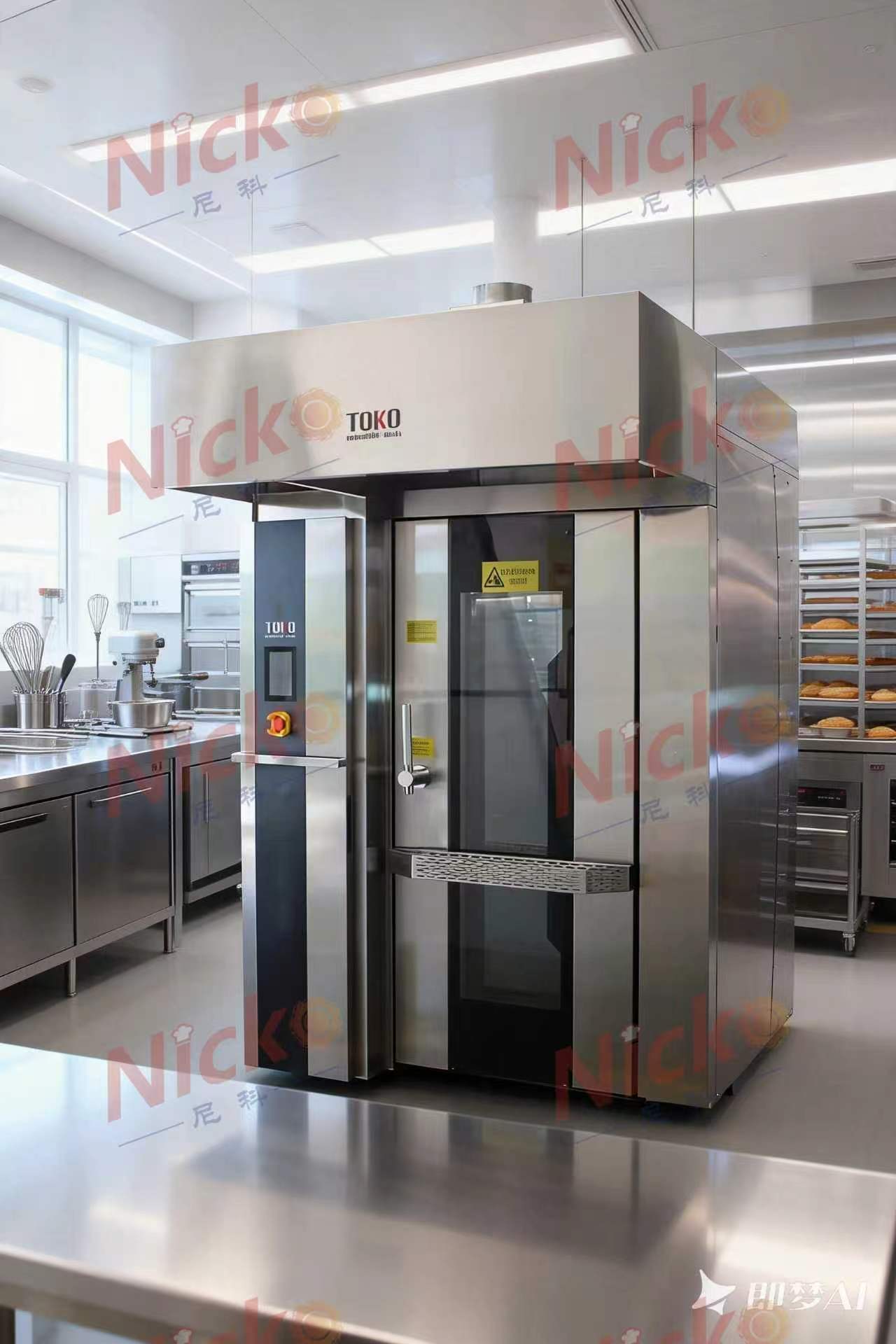
Unlike Deck Ovens, which require manual loading and unloading of individual trays, Rotary Ovens utilize a Rack-in system. This allows 16 to 32 trays to be rolled into the baking chamber at once, achieving unmatched operational efficiency.
2. Industrial-Grade Consistency for Brand Building
Central kitchens fear inconsistent quality, often caused by the “human factor”—variations in technician skill levels. This is the greatest risk for food companies building a brand.
The Rotary Oven ensures consistency through two factors: Rotary Convection & Airflow Balance and Digital Program Management.
- The internal forced-air convection system, combined with a 360-degree rotating rack, ensures every loaf receives identical heat exposure.
- Advanced digital control panels allow operators to preset temperature, humidity, and airflow, guaranteeing stable results regardless of who is operating the machine.
3. High Automation & Reduced Labor Costs
Central kitchens face fluctuating order volumes and sudden spikes in production pressure.
- With a Rotary Oven, one skilled operator can manage 2–3 units simultaneously.
- It eliminates the physically demanding task of “peel-loading” associated with deck ovens.
- The standardized rack dimensions allow for seamless workflow integration: dough can be moved directly from the Proofer Room to the oven, and then to the cooling/packaging line, optimizing the entire factory layout.
4. Versatility for Multiple Product Lines
Central kitchens handle more than just bread. They process toast, burger buns, cookies, and even savory items like roasted poultry. The heat-dehydration capabilities of the Rotary Oven ensure these items are thoroughly cooked with an ideal texture.
High-Performance Rotary Oven Review
Taking the Nicko’s 12/16/32/64 Trays Rotary Oven as an example, here are the selection standards for this equipment:
- Scalable Capacity: Ranging from 12 to 64 trays, it covers everything from mid-sized bakery chains to massive industrial central kitchens.
- Energy Flexibility: Options for Diesel, LPG/Natural Gas, and Electric power models significantly reduce facility transformation costs.
- Safety First: Equipped with overheating protection and leakage protection to ensure industrial line safety.
- Structural Integrity: Weighing between 1,000kg and 2,800kg, the heavy-duty steel frame and high-density insulation ensure superior thermal stability.
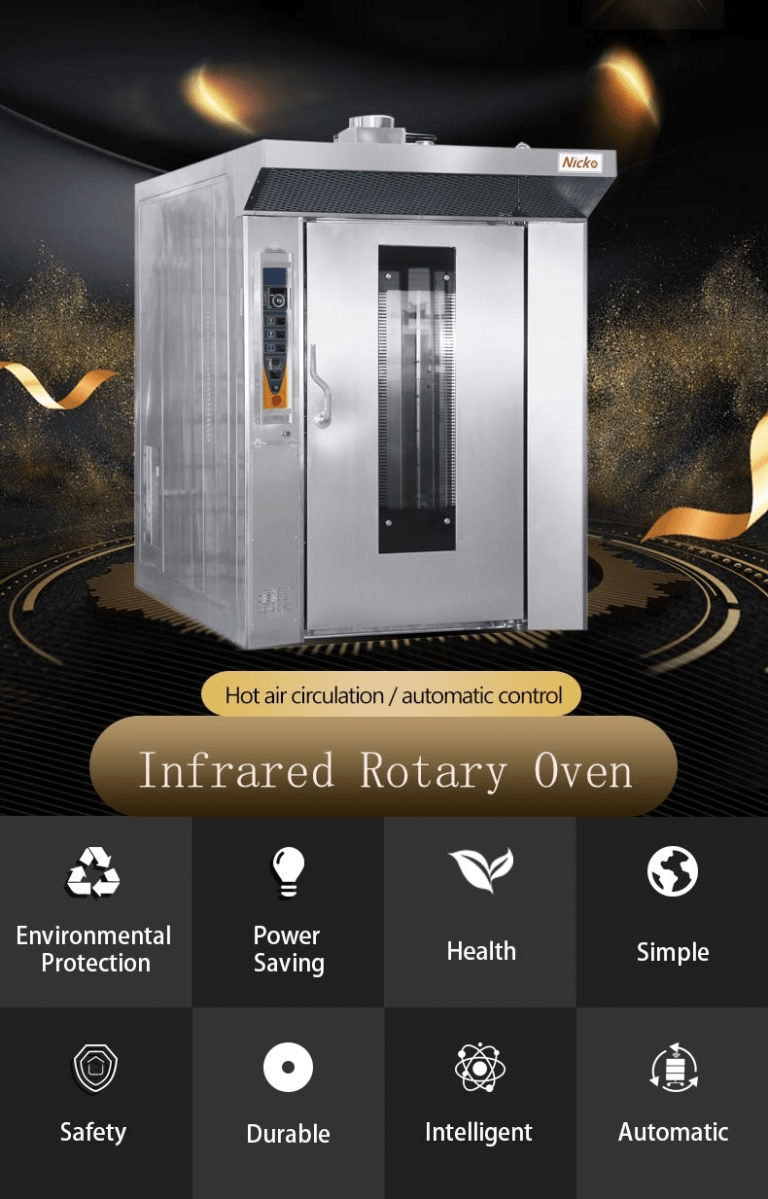
Comparative Review: Nicko Standard Rotary Oven vs. Nicko Infrared Rotary Oven
| Comparison Dimension | Nicko Standard Rotary (T Series) | Nicko Infrared Rotary (T-32H) |
| Heating Principle | Convection (Hot air circulation) | Convection + Infrared Radiation |
| Penetration Power | Air-based, surface-to-core | Radiant, rapid core heating |
| Crust Results | Uniform, gentle, easily controlled | Faster caramelization, vibrant color |
| Efficiency/Response | Robust, ideal for long shifts | Fast heating, high thermal efficiency, energy-saving |
| Best Application | Toast, buns, large-scale factories | Crispy items, pizza, high-quality crusty bread |
Which one should you choose?
1. For Industrial Mass-Production Factories:
- Recommendation: Standard Rotary Oven (12/16/32/64 Trays)
- Reason: Offers a wider range of energy solutions (Diesel/Gas) and features a simple maintenance logic ideal for large production lines.
2. For High-End Central Kitchens or Boutique Chains:
- Recommendation: Infrared Rotary Oven (Infrared T-32H)
- Reason: If your customers demand an exquisite crust and a brilliant golden color, the infrared model is the premier choice. Additionally, it is more energy-efficient and highly suitable for facilities where space is limited but volume demand is high.