

Anyone who bakes regularly must have faced the dilemma of picking a proofing cabinet. Many novice bakers cannot tell the differences between a standard proofer and a retarder proofer, remaining confused about their distinctions, suitability and whether the extra investment is worthwhile.
With years of experience in the baking equipment industry and practical use of both types of machines, this article analyzes their differences, pros & cons and applicable scenarios from a professional perspective, helping you pick the optimal device[^1].
1.Fundamental Differences Between Standard Proofer and Retarder Proofer
Standard Proofer
It features simple functions, only equipped with heating and humidifying systems. Designed solely for immediate rapid proofing, it creates a warm and humid environment to raise dough temperature and humidity, facilitating dough expansion without cooling, fresh-keeping or delayed fermentation functions.
Retarder Proofer
Integrates refrigeration preservation and timed proofing into one unit. Fitted with dual cooling and heating systems, it suspends dough fermentation via low-temperature dormancy first, then automatically switches to proofing mode at preset time, enabling off-peak baking and overnight fermentation[^2].
Professional retarder proofers adopt independent cooling modules to maintain steady dough temperature and gradual fermentation. Customizable baking programming also ensures thorough baking and ideal appearance of finished pastries.
2.Comprehensive Comparison of Two Proofing Cabinets
Operating Modes: Single Function vs Dual Switchable Modes
The standard proofer only supports constant temperature and humidity proofing. It boosts yeast activity continuously once started with limited adjustable parameters. Dough cannot pause fermenting, easily leading to over-fermentation, sour taste and collapsed texture.
The retarder proofer owns two switchable modes.
The retardation mode slows down yeast activity greatly under low temperature to stabilize dough state, allowing dough preparation half a day in advance or overnight resting. The automatic proofing mode elevates temperature and humidity automatically at scheduled time to finish final fermentation, saving plenty of manual labor. Intelligent automatic humidification and dehumidification further cut operational costs.
3.Application Scenarios: On-demand Baking vs Mass Production & Long Fermentation
Standard proofers perfectly suit household occasional baking and small private bakeries with limited daily orders focusing on fresh-made toast and dinner rolls.
Retarder proofers are ideal for steady-order private shops and physical bakeries pursuing mass output. Dough can be placed in the cabinet overnight with preset programs for low-temperature preservation and automatic next-day proofing, greatly boosting working efficiency. It is also indispensable for making European bread, baguettes, soft European bread and croissants that require prolonged low-temperature fermentation, which unlocks original wheat aroma of flour.
Finished Product Texture
High-speed fermentation in standard proofers compromises dough flavor. Bread made this way has mild wheat taste and single flavor profile, though it boasts fast production speed. Texture quality is vulnerable to ambient temperature and operating pace, frequently resulting in dry crust and sour notes due to improper control.
Low-temperature slow fermentation of retarder proofers caters to premium pastry making. Sufficient flour hydration and gluten development enrich flavor substances accumulation. Under identical formulas and operations, overnight fermented bread delivers richer wheat fragrance, natural mild sweetness, tender fluffy texture and longer shelf life with no sour aftertaste[^3].
Operation Difficulty: Beginner Restricted vs User-friendly
Standard proofers own ultra-simple operation with zero learning curve, accessible for new learners. Yet it has low error tolerance, bringing unstable product quality during peak order periods.
Retarder proofers support fully automatic operation after setting refrigeration duration, proofing temperature and time, requiring no on-site monitoring throughout the process.
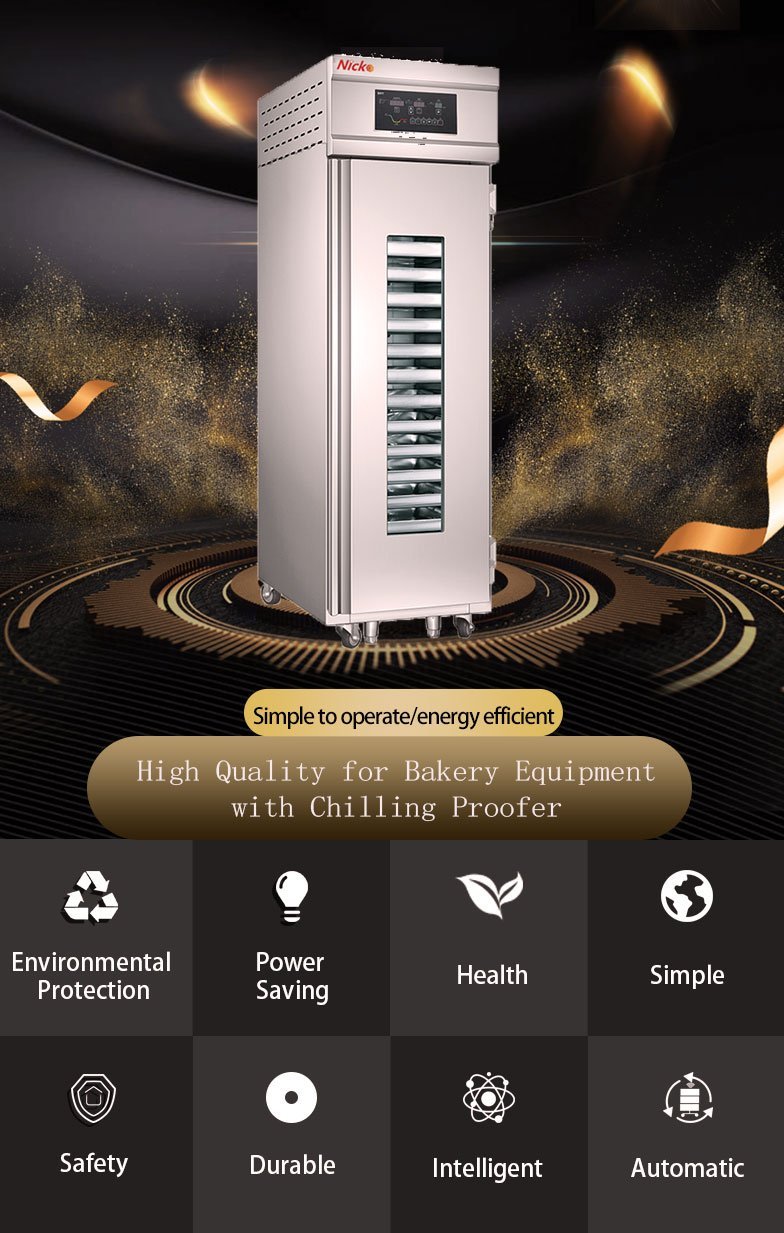
Take professional proofers from Nicko as an example. They support automated operation, including automatic humidification and dehumidification that cuts labor costs. Serving as high-efficiency intelligent professional fermentation chambers, these proofers come with diverse automatic functions and greatly ease baking workload.
Nicko’s retarder proofer
4.Definitive Selection Criteria
Choose Standard Proofer
Occasional household baking with low service frequency
Small-scale private baking with same-day dough preparation and baking
Prioritize fast production of basic bread like toast and dinner rolls
Limited space demand, pursue simplicity and low maintenance cost
Choose Retarder Proofer
Commercial private bakeries and brick-and-mortar stores needing batch & timed production
Specialize in low-temperature fermented pastries: soft European bread, baguettes, croissants and sourdough bread
Reduce working hours, avoid early attendance and rush orders to elevate productivity
Pursue superior flavor and stable appearance for premium baking and product value enhancement
Advance dough preparation and staggered production to ease peak-time production pressure
5.Conclusion
A standard proofer delivers satisfying cost performance for casual baking use. Retarder proofers are the preferred option for professional bakeries and food manufacturing factories.
Reference Citation
[^1]: Bakery Equipment Technical Specification & Practical Application Manual, China Food Machinery Industry Association, 2024
[^2]: Professional Dough Fermentation Technology Standard, International Bakers Association Official Guideline
[^3]: Sensory Evaluation Standard of Fermented Bakery Products, National Food Quality Supervision Center