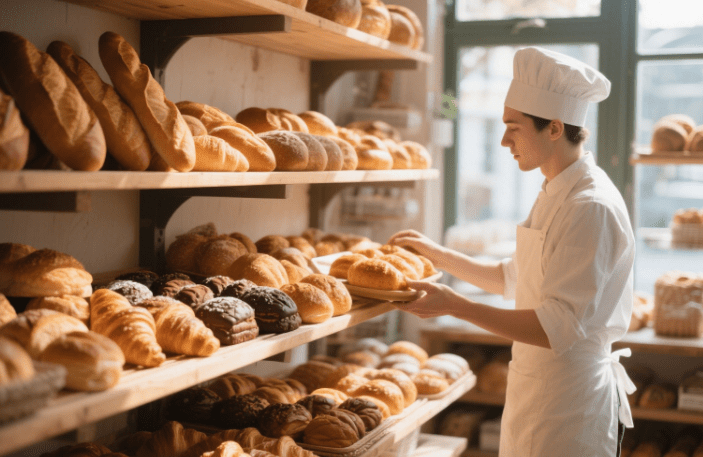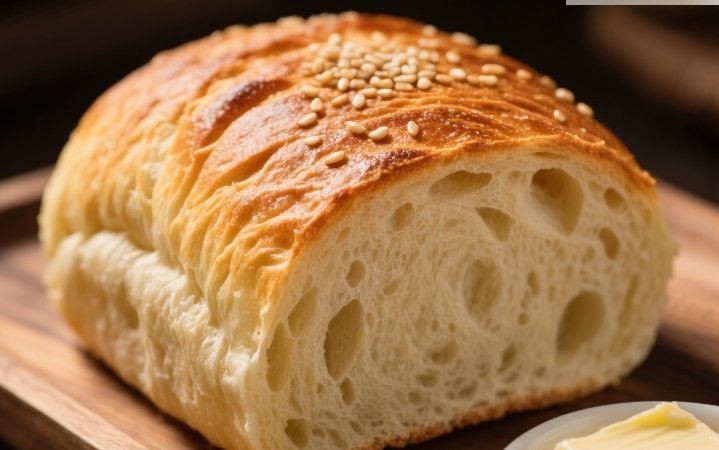
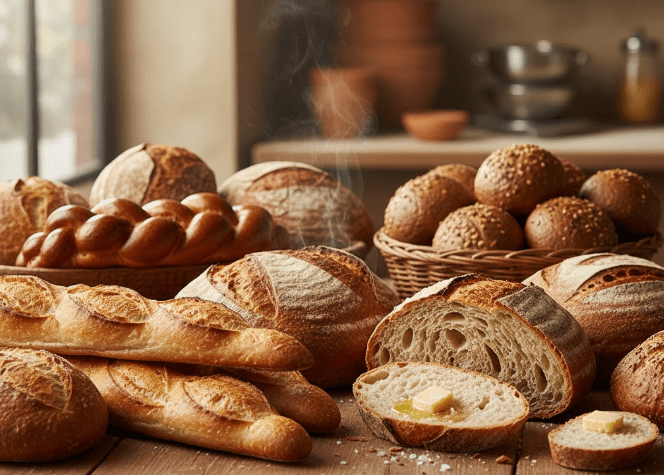

In the baking industry, a 2 AM wake-up call has long been considered an unavoidable rite of passage. Bakers relying on traditional proofer setups are forced into grueling graveyard shifts—mixing dough, shaping loaves, and waiting out lengthy fermentation cycles in the dead of night. This labor-intensive schedule not only causes severe burnout but also throttles a bakery’s scalability.
However, global bakery chains like Paris Baguette and Maison Landemaine have disrupted this paradigm. Their secret weapon? Advanced Retarder Proofers. By leveraging sophisticated temperature and humidity zoning, these smart climate chambers have eliminated the need for punishing early-morning shifts.
From the dual perspectives of commercial kitchen management and modern baking science, this article breaks down how to use a retarder proofer to streamline your bakery’s production schedule and elevate product flavor.
1. How Does a Retarder Proofer Work?
To optimize your production flow, you must first understand the engineering logic of a retarder proofer. Far more than a simple refrigerator-proofer hybrid, it is an intelligent climate-control chamber capable of pinpoint precision over time, temperature, and relative humidity.
The automated workflow typically consists of three core phases:
[ 1. Retarding Phase ]
Inhibits yeast activity; sends dough into a state of "dormancy."
↓
[ 2. Recovery Phase ]
Gradually raises temperatures; encourages the accumulation of flavor precursors.
↓
[ 3. Proofing Phase ]
Automatically ramps up heat and humidity; completes the final rise.
By seamlessly transitioning through these three stages, bakers can pinpoint exactly when dough will hit peak fermentation—down to the minute. This allows you to decouple production into two distinct blocks: prep work on the afternoon prior, and direct baking the following morning. The result? No more 2 AM shifts just to get dough ready.
2. Global Bakery Scheduling: Traditional vs. Modern Workflow
To illustrate the operational shift, let’s compare two scheduling models for a mid-sized artisanal bakery producing 300 croissants and sourdough loaves daily:
❌ The Traditional Schedule (A Baker’s Nightmare)
- 02:00 AM: Clock in. Begin scaling and mixing/kneading dough.
- 03:00 AM – 05:00 AM: Bulk fermentation, bench rest, dividing, intermediate proofing, and hand-shaping.
- 05:00 AM – 06:45 AM: Dough goes into a standard proofer. The baker must constantly monitor ambient levels to prevent over-proofing.
- 06:45 AM – 07:15 AM: Egg washing, scoring, and loading into the ovens.
- 07:30 AM: The first batch barely makes it to the display cases. The baker is already exhausted, spiking the risk of operational errors.
The Retarder Proofer Schedule
The entire production timeline is elegantly shifted forward, moving the heavy lifting to the previous day’s day shift:
| Time Frame | Shift Context | Kitchen Operations | Retarder Proofer Status |
| Day 1: 14:00 – 16:00 | Afternoon Shift | Mix, divide, laminate, and shape. Arrange raw croissant en croûte onto trays; load racks straight into the unit. | Retarding: Rapidly pulls temperatures down to $2^\circ\text{C}$ to halt yeast activity. |
| Day 1: 16:00 – Day 2: 03:00 | Unattended | Dough undergoes an 11-hour cold fermentation cycle. | Maturation: Holds steady at $2^\circ\text{C} \sim 4^\circ\text{C}$. Lactic acid bacteria break down starches, developing complex organic acids. |
| Day 2: 03:00 – 05:30 | Unattended | Programmed logic kicks in, automatically introducing heat and moisture to trigger the final proof. | Proofing: Ramps up to $28^\circ\text{C}$ at $80\%$ relative humidity. |
| Day 2: 06:00 | Morning Baking Shift | The morning baker arrives well-rested. Upon opening the doors, dough is perfectly proofed (expanded to 2.5x volume). | Hold Function: Automatically drops to a $15^\circ\text{C}$ holding zone to prevent over-proofing. |
| Day 2: 06:15 – 06:45 | Morning Shift | Egg wash, score, and bake directly in the deck ovens. | — |
| Day 2: 07:00 AM | Doors Open | Fresh, piping-hot pastries hit the shelves right on time. | — |
3. The Business Case for Retarder Proofer Scheduling
For bakery owners and operators, switching to an automated proofing schedule delivers returns that go far beyond staff comfort—it directly optimizes your profit and loss (P&L) statement.
Reduced Labor Costs and Overtime Premiums
Under global labor standards, hours worked between 2 AM and 5 AM command steep night-shift differentials. Pushing clock-in times back to 6 AM eliminates costly overtime premiums and significantly mitigates fatigue-induced workplace injuries.
Superior Flavor Profiles and Flawless Consistency
Traditional accelerated proofing (blasting dough at 35°C) yields coarse crumbs and flat flavors. Conversely, dough matured via cold retard features:
- Crust: Achieves a deeper golden coloration, better blistering, and superior shatter-crisp texture when baked.
- Crumb: Displays uniform cell structure, enhanced moisture retention, and a longer shelf-life.
A Lean, On-Demand Supply Chain
Smart proofers feature a built-in “Sleep Mode / Hold Function.” If foot traffic at 7 AM is slower than expected, the machine can safely hold fully proofed dough at $12^\circ\text{C} \sim 15^\circ\text{C}$ for 2 to 3 hours without it turning sour. This allows staff to implement batch baking based on real-time front-of-house sales, ensuring customers get oven-fresh products all day long.
4. Procurement and Calibration Guidelines
If you are looking to source or configure a retarder proofer for your commercial facility, keep these engineering benchmarks in mind:
- Gentle Airflow Design: Prioritize units featuring micro-breeze circulation or zero-velocity intermittent cooling. High velocity winds strip moisture off raw dough, causing surface “skinning” that prevents a proper oven spring.
- Regulatory Compliance: For operations in North America or Europe, ensure units carry NSF/ANSI Standard 7 commercial sanitation approvals alongside CE or ETL electrical safety listings.
- Precision Temperature Control: Equipment engineered for gradual, uniform heat distribution guarantees better crumb structures. Brands like Nicko offer premium options equipped with independent refrigeration systems and micro-step temperature regulation to ensure smooth, predictable dough development. Their customizable proofing-to-baking recipes give operators total control over crumb profile, aesthetics, and bake consistency.
Nicko’s retarder proofer: https://www.nicko.com.cn/product/retarder-proofer/
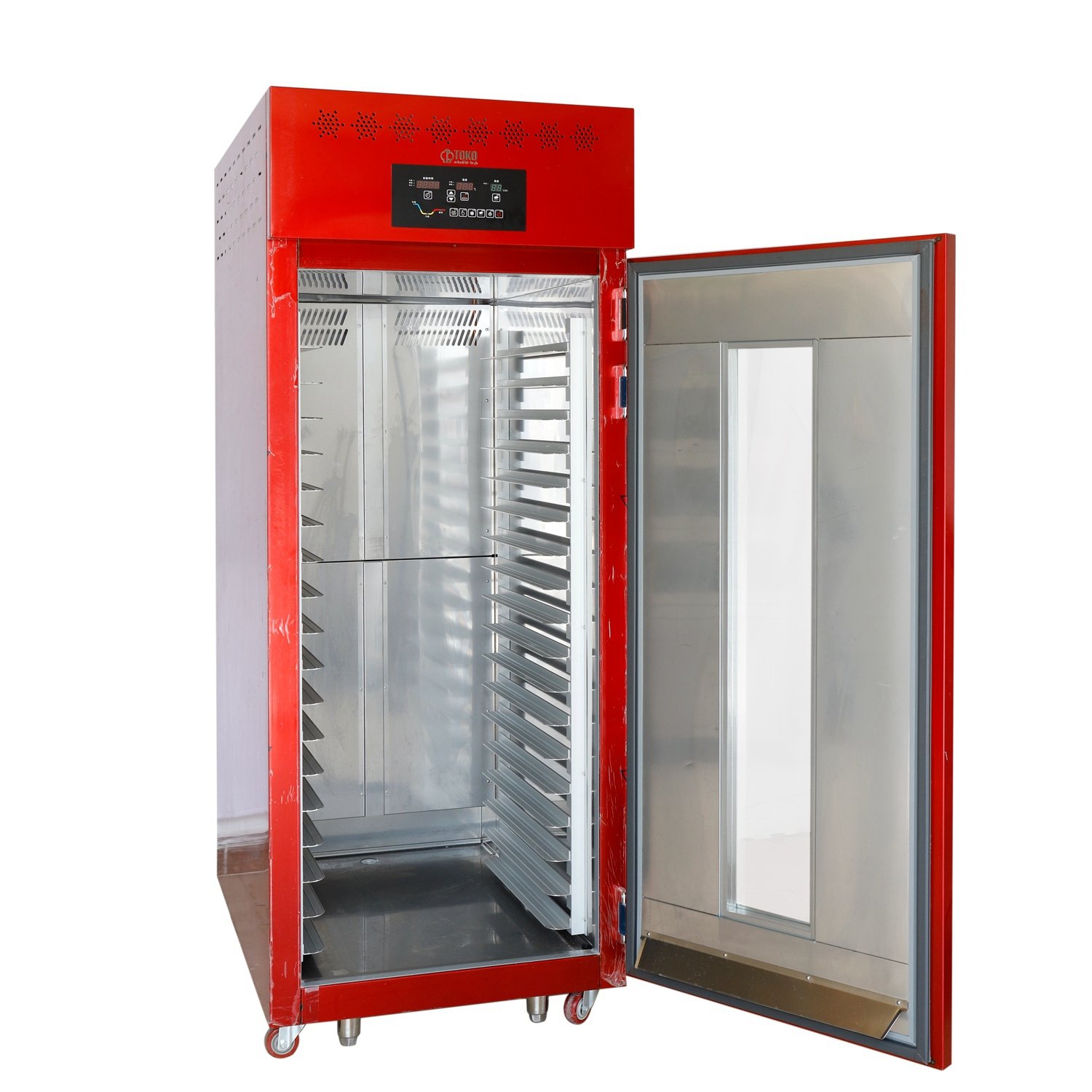
- Balanced Humidity Profiles: Look for units that feature automated, multi-point humidification and dehumidification alongside high-efficiency hot-air circulation fans to prevent cold spots. For example, Nicko’s configurations integrate intuitive touchscreen microcomputers with clear digital readouts and programmable timers, making parameter tracking completely transparent.
- Stainless Steel Architecture: Specify high-grade stainless steel interiors and exteriors. This ensures easy washdowns and maintains strict food-safety and sanitation hygiene standards.
Conclusion
The modern retarder proofer represents a fundamental shift in how commercial bakeries manage time and labor. For forward-thinking brands, allowing your team to walk into the kitchen after sunrise, clear-headed and energized, is the ultimate guarantee of a flawless product.