

For commercial bakeries, consistent cavity temperature distribution and thermal efficiency directly govern batch-to-batch product uniformity, which in turn dictates operational overheads. Constrained by limited structural layouts and static heat field design, conventional commercial ovens suffer chronic industry pain points, including extreme temperature disparities inside the chamber and uneven crust coloring. These drawbacks render them unsuitable for standardized, high-volume premium baking production. As a leading high-end solution for commercial baking facilities, Rotary Rack Ovens integrated with full convection control eliminate fundamental performance flaws of legacy baking equipment via closed-loop hot air circulation and multi-stage dynamic parameter synchronization.
1. Minimal Temperature Variation Within the Oven Cavity
Traditional convection ovens only discharge hot air from a single side, creating drastic temperature gaps across the chamber. Trays positioned in the middle or rear zones receive insufficient heat, resulting in underbaked dough cores. For commercial bakeries requiring rapid mass dough production, such inconsistency severely compromises uniform product quality.
By contrast, premium Rotary Rack Ovens fitted with full convection control utilise cross-line heat exchangers to generate a 360° closed-loop three-dimensional hot air cycle. Paired with continuously rotating rack trolleys, these units maintain internal temperature fluctuations within ±1.5°C, completely resolving uneven heating issues. The omnidirectional convection airflow eliminates cold spots, delivering consistent crust coloration across every loaf in a full batch and drastically cutting reject rates from visual imperfections.
Furthermore, stable circulating hot air effectively locks moisture inside dough pieces. The same weight of flour yields heavier finished loaves, driving long-term profit growth. Consistent, sustained heat enables full dough expansion, producing larger loaves with light, airy crumb and superior soft texture.

Real-World Case Study: Quality Renovation at an American Chain Bakery
An American artisanal bakery producing 800 bread servings daily previously operated with three traditional deck ovens. Two staff members were required to reposition trays every 20 minutes to counteract uneven browning. Monthly dough write-offs due to inconsistent crust appearance exceeded $600. After upgrading to the Nicko’s R-Series Rotary Rack Oven with full convection control:
- Manual tray rotation mid-bake is eliminated, cutting bakery labour hours per shift by approximately 50%;
- Uniform crust colouring drastically reduces visual defects and material wastage;
- Daily production capacity rises by 45%, enabling order expansion without additional equipment investment.
2. Precision Multi-Stage Thermal Regulation
Full convection control is far more than basic hot air circulation. The system synchronises fan speed, airflow volume, exhaust dampers and steam injection across distinct baking phases with pinpoint accuracy.
At the initial baking stage, fine mist steam is injected instantly alongside reduced fan velocity, forming a uniform water film over dough surfaces to delay premature crust formation. Mid-to-late baking phases trigger elevated fan speeds and mild exhaust ventilation, rapidly evacuating excess surface moisture to develop thin, crisp, evenly coloured crusts. This level of precise chamber environment modulation cannot be replicated by static traditional ovens.
3. Unmatched Operational Efficiency: Full Trolley Loading vs. Individual Tray Handling
Loading 16 to 32 trays into conventional ovens requires manual placement of each tray one by one, leaving the oven door ajar for several minutes. This labour-intensive workflow triggers severe cavity temperature drops that prolong bake cycles.
Rotary rack ovens adopt trolley-mounted rack designs supported by hanging brackets or base platforms. Entire batches of 16–32 trays can be loaded and unloaded in a single streamlined operation within seconds, slashing manual workloads and drastically shortening auxiliary production durations.
Take the Nicko’s R-Series Rotary Oven as an example: https://www.nicko.com.cn/product/nickos-revent-rotary-oven/ Its standard trolley loading architecture accommodates full batches of 16–32 trays, which can be fully inserted or extracted in just 15 seconds. This design minimises heat loss from prolonged door openings while compressing non-baking auxiliary workflow time.
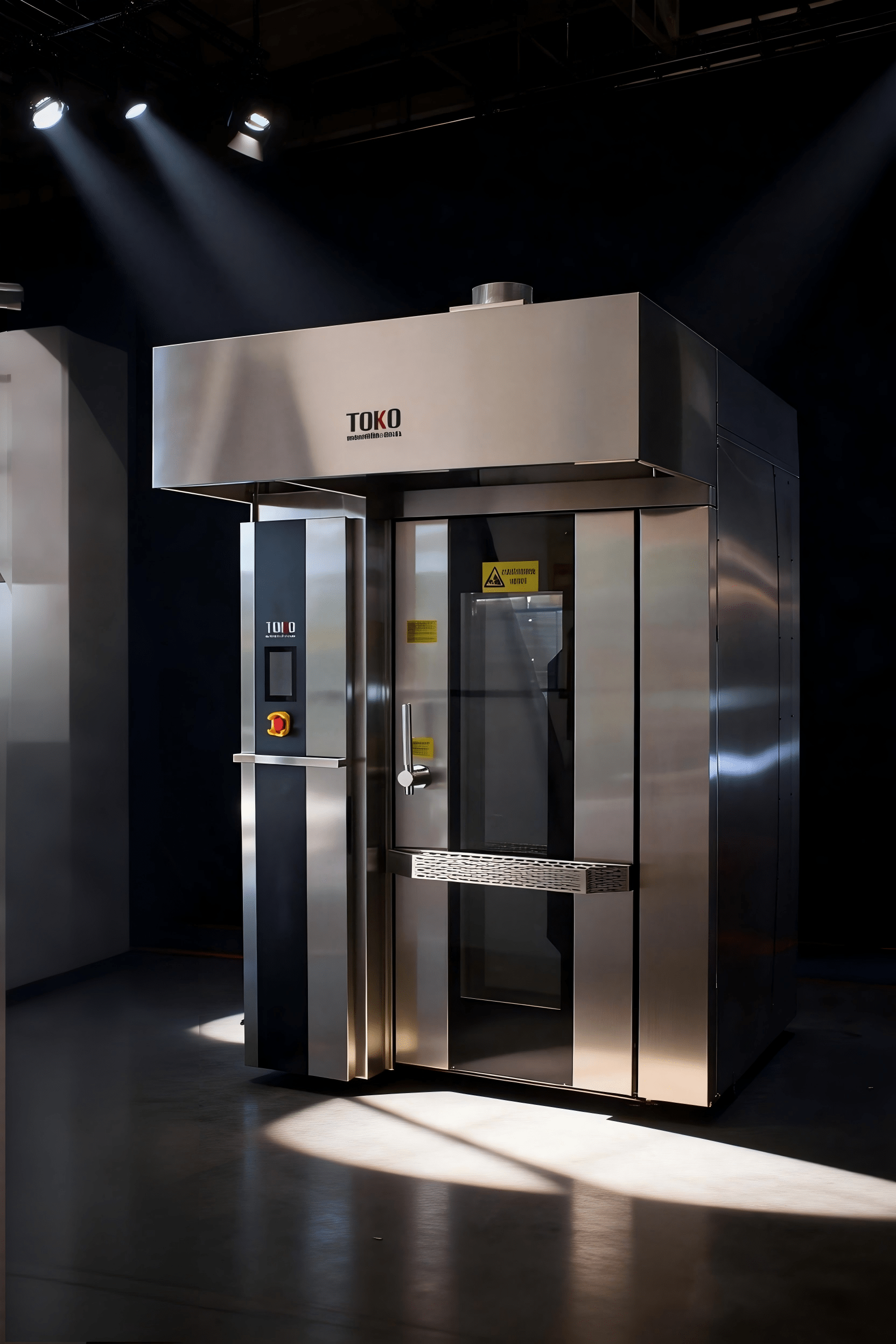
4. Superior Thermal Efficiency
The full convection circulation system rapidly transfers thermal energy generated by gas or electric heating elements throughout the baking chamber, delivering far higher heat transfer efficiency than natural convection in static legacy ovens.
Additionally, Rotary Rack Ovens equipped with full convection control incur minimal heat loss during door openings. Fast trolley loading/unloading paired with rapid convection-driven temperature recovery lowers overall energy consumption across complete baking cycles.
5. Enables Consistent, Standardised Mass Production
Traditional baking operations rely heavily on head bakers’ subjective experience; technicians must judge optimal tray rotation timings and adjust bake durations based on each tray’s position through intuition.
Rotary rack ovens with full convection control feature built-in PLC systems that store multi-stage baking profiles, locking fixed parameters for temperature, airflow, humidity and bake duration. This guarantees identical product quality across different shifts and production batches.
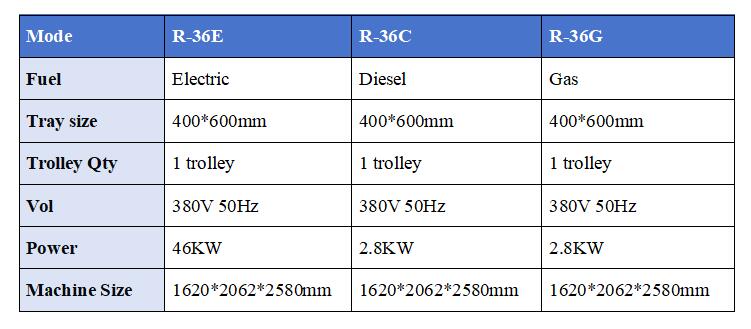
The R-Series Rotary Rack Oven exemplifies this capability via its dedicated programmable control panel, which stores up to 99 custom baking recipes with 8 independent configurable phases. Operators can precisely calibrate temperature, fan speed, steam injection volume and exhaust duration for every production stage.
References:
- American Society of Baking (ASB). Oven Heat and Mass Transfer Mechanics in Commercial Bakery Operations. ASB Technical Knowledge Base.
- BAKERpedia. Convection Oven Technology & Oven Heat Flux Profiles. BAKERpedia Processing Protocols.
- Mondal, A., & Datta, A. K. (2008). Bread baking – A review of heat and mass transfer studies. Journal of Food Engineering, 86(3), 322-331.
- Pyler, E. J., & Gorton, L. (2008). Baking Science & Technology (4th ed., Vol. 2: Operations). Sosland Publishing Company.
- AIB International. Bakery Equipment Efficiency & Thermal Loss Assessment Guidelines. AIB Technical Bulletin. (Guidelines covering trolley loading efficiency, thermal loss evaluation and labour productivity optimisation for commercial bakery facilities)