
For home bakers, a dry dough skin or collapsed crumb is little more than a minor frustration.
But in high-volume commercial bakeries running continuous production, these defects are costly quality failures that keep plant managers up at night. They result in entire batches being scrapped, and disrupt production schedules and oven loading timetables.
Why do these issues arise during fermentation and proofing? How can bakers prevent skinning and collapse? And how do industrial-grade retarder proofers resolve these pain points through engineering? This article breaks down the technology in detail.
I. Why Dough Skins Over or Collapses
1. What causes dough to form a hard, dry skin?
A flawless dough surface depends entirely on ambient humidity. During bench rest, proofing or slow cold retardation, if relative humidity (RH) drops too low, or if internal fan speeds are too high, moisture evaporates rapidly from the dough surface, leaving it under-hydrated.
This causes the outer layer to harden quickly and lose extensibility — a defect known as skinning or crusting over. When the dough enters the oven, the rigid, dry skin tears instead of expanding cleanly, resulting in cracked, misshapen loaves with poor visual appeal.
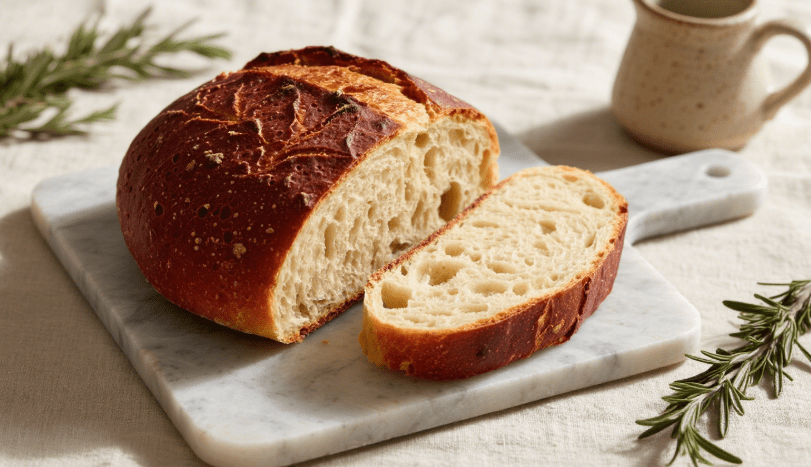
2. What causes dough to collapse?
The root cause lies in uncontrolled yeast activity. If proofing temperatures are too high or fluctuate sharply, yeast can become overactive and produce carbon dioxide at an uncontrolled rate. If proofing time is also excessive, CO₂ production outpaces what the gluten network can contain — and the gas bubbles rupture.
With its internal structural network broken down, the dough collapses inside the proofer. The finished loaf will have a poor, dense crumb structure and a pronounced alcoholic, sour off-flavour from over-fermentation.
II. How Retarder Proofers Eliminate Skinning & Collapse
Modern industrial retarder-proofers offer a far more reliable solution to both issues. High-end units are fitted with high-precision humidity sensors and electric steam generation systems that lock chamber humidity within a tightly controlled optimal range.
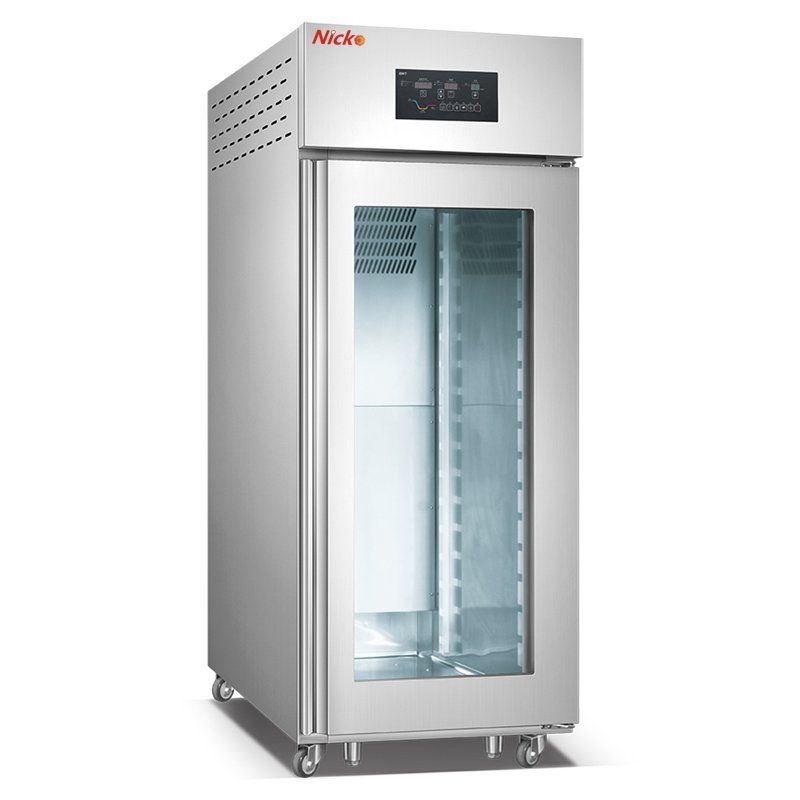
Take Nicko’s retarder proofer( https://www.nicko.com.cn/product/retarder-proofer/ ), for example. It features an independent refrigeration system to regulate dough temperature for slow, controlled retarded fermentation. It also comes with an automated touchscreen control panel and digital display that accurately monitor and adjust temperature and humidity in real time. By holding humidity within the ideal sweet spot, it ensures fine water droplets are evenly distributed across every dough piece in the chamber.
The end result: dough surfaces stay smooth, hydrated and fully risen throughout fermentation, with no dry, hardened skin. Baked croissants and danishes have clean, distinct layers, and bread loaves bake with a thin, glossy crust.
2. Multi-stage programmable proofing curves
Premium retarder-proofers support fully automated multi-stage programmes — typically a cold retardation phase, a gradual warming phase, and a final constant-temperature, constant-humidity proofing stage.
In overnight mode, for example, the unit automatically holds the chamber at 2–4°C from around 2:00 a.m. to suppress yeast activity. It then ramps up temperature gently on a pre-set curve over the 3 hours before bakers start their shift, raising humidity progressively as it warms.
Nicko retarder-proofers, for instance, include intelligent programming that lets bakers customise fermentation profiles for different dough types and specific bake requirements. The system can be tailored to individual product recipes to ensure full, even proof and ideal finished appearance. Its high level of automation also handles humidification and dehumidification cycles automatically.
Summary
Retarder-proofers give bakers full control over the dough fermentation and proofing process from start to finish. They help streamline production efficiency and reduce labour costs. Crucially, they eliminate the temperature shock that used to occur when dough was manually moved from cold rooms to proofers, preventing collapse caused by over-proofing or sudden temperature spikes.