
Running a bakery brings many challenges. Aside from soaring rental costs, maintaining precise environmental temperatures ranks high on the list. For artisan bakeries operating in summer or tropical climates, achieving stable dough fermentation under high heat is nothing short of a constant battle against the weather.
In the past, bakers would arrive at the kitchen as early as 3 a.m. to mix dough and carry out fermentation, ensuring the first loaves of toast and baguettes hit the shelves by 7 a.m. Today, professional bakeries widely adopt the workflow of Frozen Dough paired with a Commercial Retarder Proofer. This setup not only lets bakers enjoy sufficient rest but also elevates the flavour profile of bread produced via overnight fermentation to a whole new level.
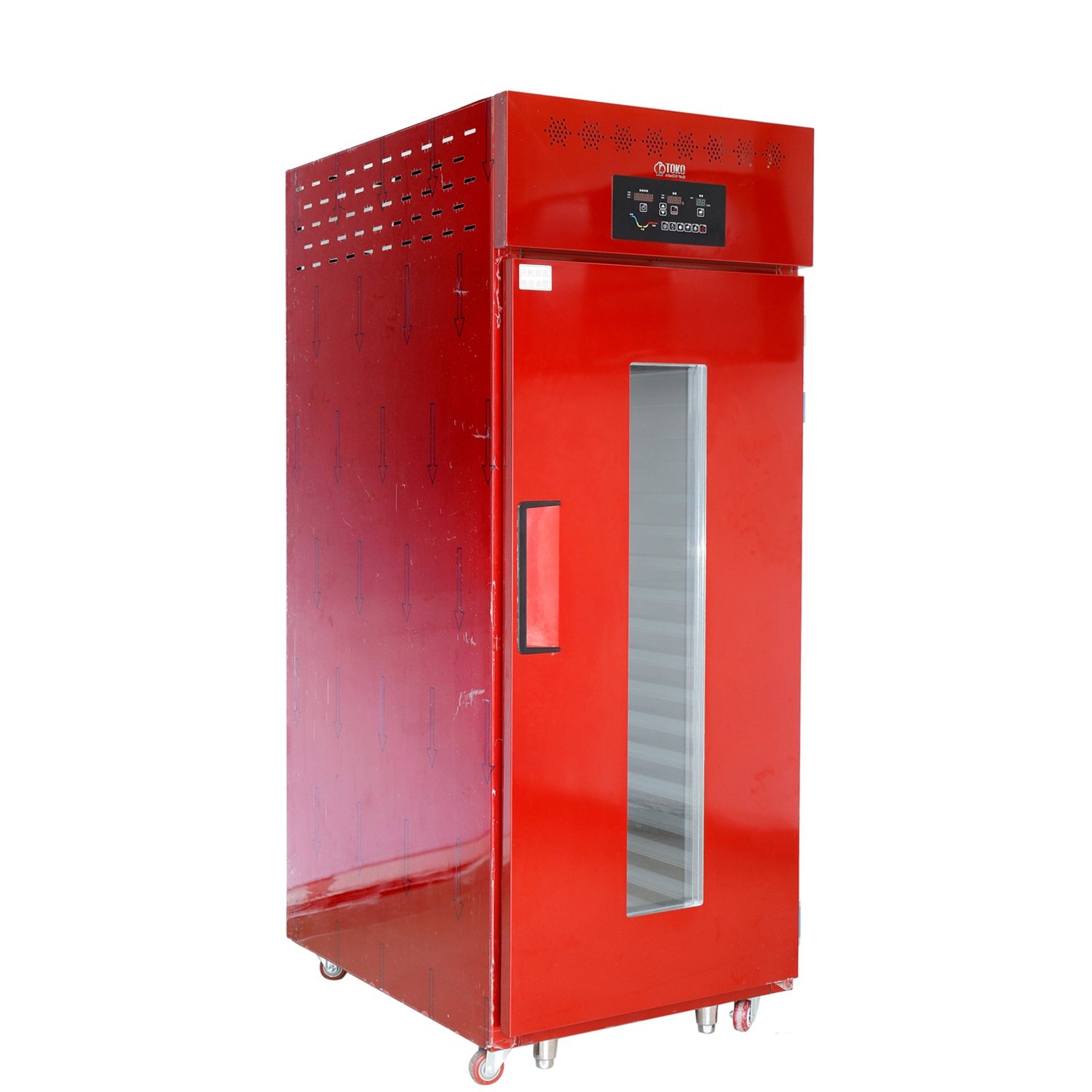
In this article, we break down how commercial retarder proofers regulate temperature and humidity with precision.
1. Standard Proofer vs. Commercial Retarder Proofer
Newcomers to the baking industry often ask: “I already own a standard proofer. Can’t I just add a timer to run overnight fermentation?” The straightforward answer: No, it will not work. Commercial baking practice is far more complex than it seems.
Standard proofers offer limited functionality — typically only heating and humidification, with no cooling capability. They cannot sustain steady temperatures or run programmed fermentation cycles, which severely limits bread flavour development. Especially in tropical settings, dough left at ambient temperature overnight will suffer from over-fermentation. The yeast overworks, leading to collapsed loaves, sour off-notes and blistered crusts. The resulting bread lacks visual appeal and depth of flavour, inevitably driving customers away.
| Comparison Metric | Standard Proofer | Commercial Retarder Proofer |
|---|---|---|
| Core Functions | Heating + Humidification only | Freezing, chilling, gentle thawing & temperature-controlled proofing |
| Temperature Range | Ambient to 50°C | -10°C to 40°C (precision regulated) |
| Unattended Overnight Operation | ❌ Not feasible (risk of over-fermentation) | ✅ Intelligent programmed temperature cycling, fully automatic |
| Ideal Applications | Freshly mixed dough, immediate proofing | Frozen dough preparation, slow overnight fermentation, central kitchen distribution |
2. Three Stages of Overnight Fermentation Controlled by a Retarder Proofer
The biggest advantage of a commercial retarder proofer lies in its built-in multi-stage intelligent temperature and humidity programming. Take Nicko’s smart retarder proofer as an example. Equipped with a microcomputer touch control panel and digital display, it allows bakers to customise precise fermentation cycles. For frozen dough, the unit automatically executes these three phases unattended through the night:
Stage 1: Cold Retardation (Resting Phase: 0°C – 4°C)
Once mixed dough is loaded into the unit, the refrigeration system lowers the internal temperature to 0°C–4°C. At this temperature, yeast activity is drastically suppressed, preventing premature fermentation and preserving the dough’s gluten network. Bakers can simply set their alarms and head home for a full night’s rest, arriving at work refreshed. Baking no longer needs to be an exhausting chore — it becomes a creative craft.
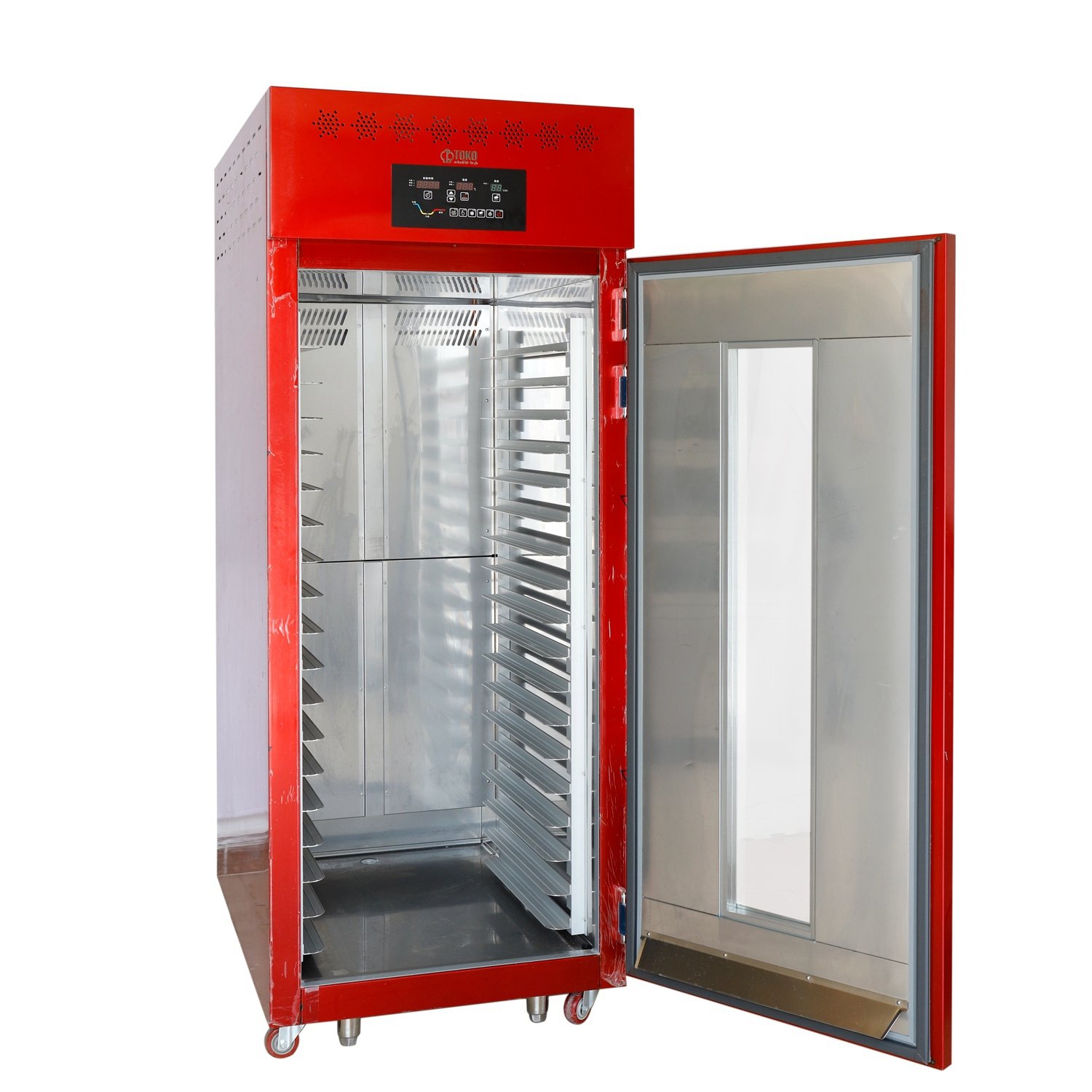
Stage 2: Gradual Recovery & Thawing (Thawing Phase: 10°C – 15°C)
Programmed to start between 1 a.m. and 3 a.m., the system slowly raises the temperature while adjusting humidity levels in tandem to gently revive the dough. Slow thawing enables ice crystals within the dough to melt gradually. Meanwhile, low-temperature fermentation encourages lactic acid bacteria and yeast to produce a rich spectrum of organic acids, unlocking deep wheat notes in the bread. This is exactly why bread made with cold, slow fermentation tastes so distinctive.
Stage 3: Activation & Final Proofing (Proofing Phase: 28°C – 32°C, 75%–85% RH)
Two hours before the baker’s morning shift begins, the machine automatically switches to standard proofing mode. It reaches the optimal temperature for yeast gas production and generates fine mist to maintain humidity. When the baker walks in at 6 a.m., the dough is perfectly fermented and ready to go straight into the oven.
3. Three Critical Principles for Frozen Dough Production
1. Precise Humidity Control to Prevent Excess Condensation
Choose a proofer with an accurate steam and humidification system. In regions with high ambient humidity, poorly engineered humidifiers create condensation drips that cause unsightly blemishes on finished bread.
2. Regulated Airflow
Avoid airflow that dries out dough surfaces. High-end retarder proofers deliver evenly distributed heat throughout the chamber without forming dry crust on dough.
Conclusion: The Commercial Value for Your Bakery
Adopting the frozen dough plus retarder proofer solution represents more than an equipment upgrade to boost productivity — it transforms your bakery’s entire operation workflow. Bakers no longer need to report for duty at 3 a.m., significantly cutting staff turnover. In addition, central kitchens can batch-produce frozen dough during off-peak hours for cold storage. Portions can be transferred to retarder proofers the night before, based on projected daily store sales. The outcome: minimised waste and maximised production output.
References
[1] Raymond, A. (2021). Commercial Baking Science and Dough Retardation Technology. Journal of Bakery Engineering & Technology, 14(3), 42–58.
[2] Nicko’s Equipment Co. (2025). Nicko’s Smart Retarder Proofer Series: Technical Operation & Specification Manual (Model RP-3D).
[3] ISO/HACCP Guidelines. (2023). Sanitary Equipment Design Standards for Commercial Bakery Fermentation Rooms (ISO 22000 Section 6.2).
[4] European Committee of Manufacturers of Bakery Equipment. (2024). Energy Efficiency Benchmark and Thermal Insulation Protocols for Commercial Baking Proofer-Retarders.