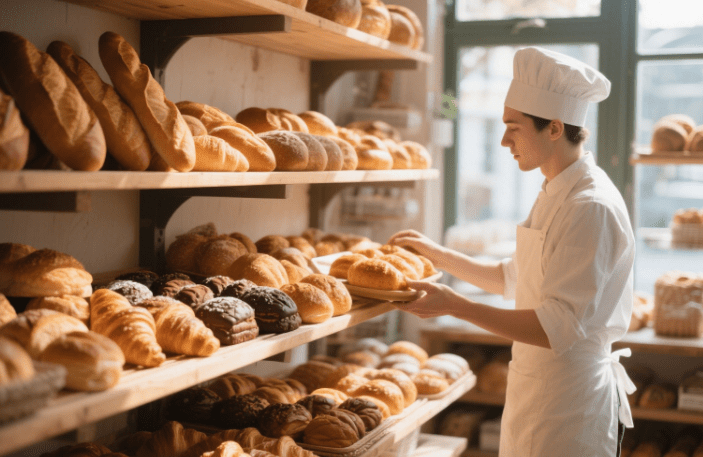


As customer demand grows, small bakeries quickly hit production capacity limits. In this scenario, investing in a commercial rack oven that fits your budget and premises becomes a key upgrade to boost output and grow profitability.
However, commercial rack ovens are bulky and impose strict site requirements. Careful advance planning for kitchen layout and clear purchasing objectives are essential. Rushing into a purchase without proper preparation often leads to a host of headaches: equipment unable to be delivered indoors, insufficient power supply, or failed installation inspections, among other issues.

Just how critical is pre-planning before purchasing a commercial rack oven?
Penny for Pound, an artisanal bakery central kitchen in Australia, serves as a prime example. Originally a small artisan operation, it rapidly expanded into a wholesale supplier with multiple retail locations. After upgrading from tray-based deck ovens to high-capacity rack ovens with trolleys, the bakery lifted overall production efficiency by 30%.
Furthermore, when baking the same batch of 32 trays of French croissants and laminated pastries, rack ovens utilise vertical space (16 to 32 levels), drastically improving kitchen space efficiency.
We recommend evaluating the following five key areas ahead of purchasing a commercial rack oven:
1. Access, Space and Workflow
Rack ovens are heavy, oversized pieces of equipment. No matter how capable the unit is, poor spatial planning will render it impractical if it cannot fit on-site or disrupts bakers’ daily workflows. Space layout is therefore your first priority.
First, confirm with the manufacturer whether the oven is delivered as a single assembled unit or shipped in components for on-site assembly, and obtain its actual physical dimensions. Measure the full delivery route: unloading zone → shop entrance → corridor → kitchen doorway. Doorways must be at least 15 cm wider than the oven’s minimum access dimensions, with sufficient clearance for turning.
Next, account for safety clearances within the bakery. Primary consideration goes to ventilation gaps around the oven for heat dissipation. Leave a minimum clearance of 30–50 cm on both sides and the rear of the oven, plus over 50 cm above the unit to accommodate the exhaust hood. Keep all flammable materials and clutter well away from the oven to eliminate fire risks.
Also reserve space for the oven door to open fully without blocking walkways or interfering with bakers.
Pay attention to the trolley staging area. Hot trolleys require room to park and manoeuvre after baking, so allocate a flat working zone of at least 1.5 metres directly in front of the oven.
2. Water, Power and Gas Supply
If opting for an electric commercial rack oven, power ratings typically range from 30 kW to 60 kW, requiring a 380V three-phase five-wire industrial power supply. Prior to purchase, consult your property management to secure adequate power capacity, and reserve a dedicated circuit breaker together with copper cabling of the correct gauge.
For gas-fired rack ovens, verify the gas supply flow rate (m³/h) and operating pressure for natural gas or LPG. Install safety shut-off valves and gas leak detectors that comply with local fire codes.
You will also need heat-resistant drainage provisions. Condensate draining from the base of the oven reaches extremely high temperatures. Fit heat-resistant metal piping or dedicated drainage troughs near outlets — standard PVC piping must not be used, as it can melt and cause leaks.
3. Ventilation and Extraction
A dedicated commercial exhaust hood must be installed above the oven. Extraction capacity should be matched to the oven’s power output; higher oven power requires stronger ventilation to ensure fumes are extracted promptly.
Gas-fired models in particular require dedicated flue pipes running directly to the rooftop, fully compliant with local environmental and fire regulations.
Additionally, install cooling systems for the kitchen to improve working conditions and staff welfare. Rack ovens generate substantial heat. The baking area needs heavy-duty ventilation or dedicated air conditioning. Without proper cooling, indoor temperatures can exceed 40°C in summer — compromising staff performance and disrupting controlled fermentation temperatures.
4. Floor Leveling and Load-Bearing Capacity
Rack ovens feature rotating cradles or bases. Trolleys need smooth, level surfaces to move in and out without obstruction. The installation zone must be precisely levelled. Sloped or uneven flooring can cause trolley jams, uneven baking heat distribution, and permanent damage to the rotating mechanism — a detail frequently overlooked by small bakeries.
Commercial rack ovens have considerable weight. Typical 16-tray and 32-tray models weigh between 1.2 tonnes and 2.5 tonnes. If your bakery is located on an upper floor, confirm the floor’s load-bearing capacity well in advance.
5. Production Capacity and Ancillary Equipment
Consistent Tray Dimensions When purchasing other bakery equipment, ensure the tray sizes compatible with your rack oven trolleys match your existing proofer, work tables and baking trays.
Trolley Allocation Avoid purchasing only one or two trolleys. For efficient workflows, allocate 3–4 trolleys per rack oven as standard practice:
- 1 trolley inside the oven during baking
- 1 trolley in the proofer or set up for loading
- 1 trolley for cooling fresh baked goods
- 1 spare trolley for circulation
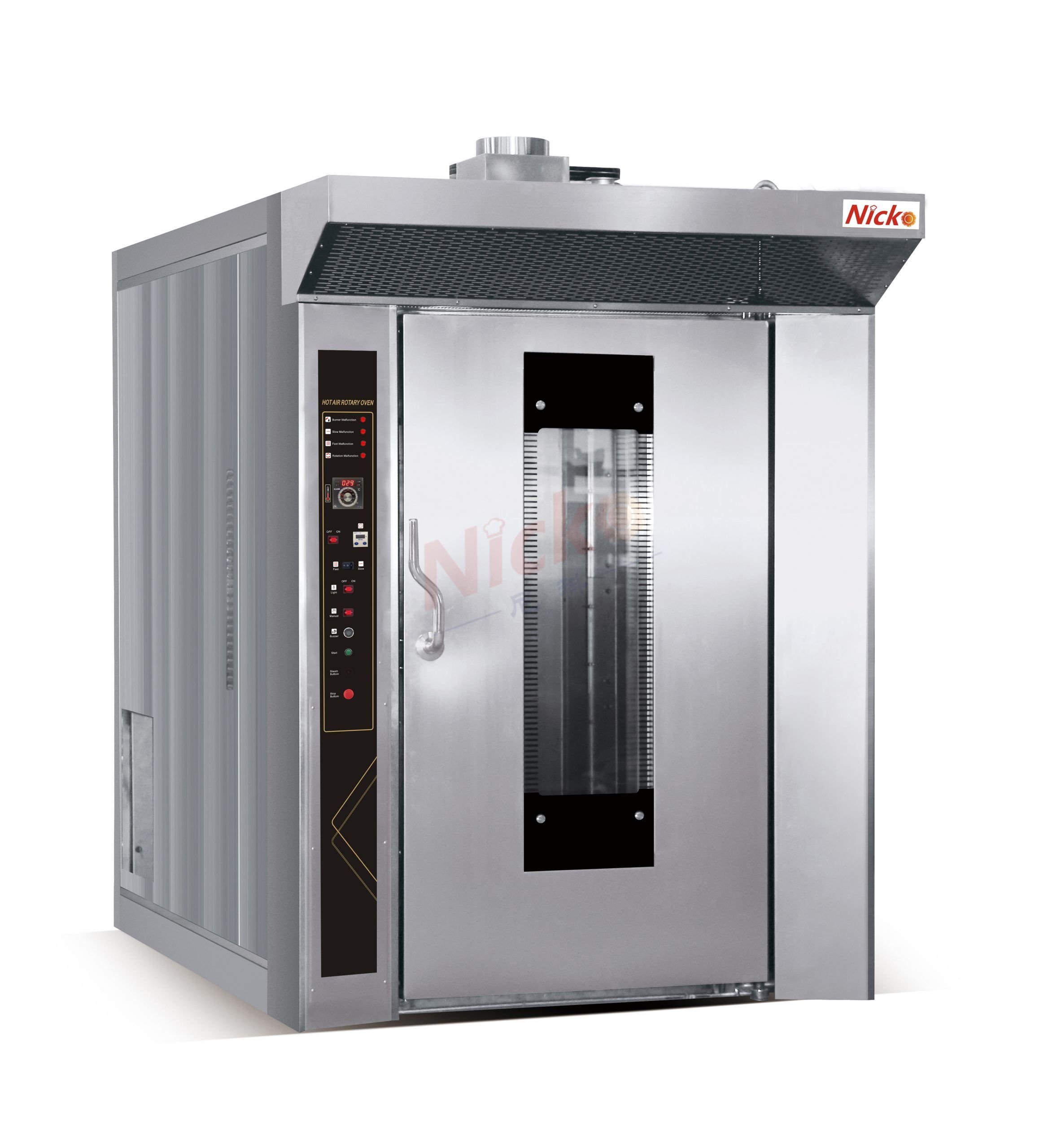
Equipment Selection Reference: Nicko’s Multi-Size Commercial Rack Ovens (up to 64 trays)
Nicko’s Commercial Rack Ovens are available in multiple capacities including 12-, 16-, 32- and 64-tray models, engineered for high-volume commercial baking. They deliver uniform heat distribution via 360° trolley rotation alongside precise temperature and humidity regulation.
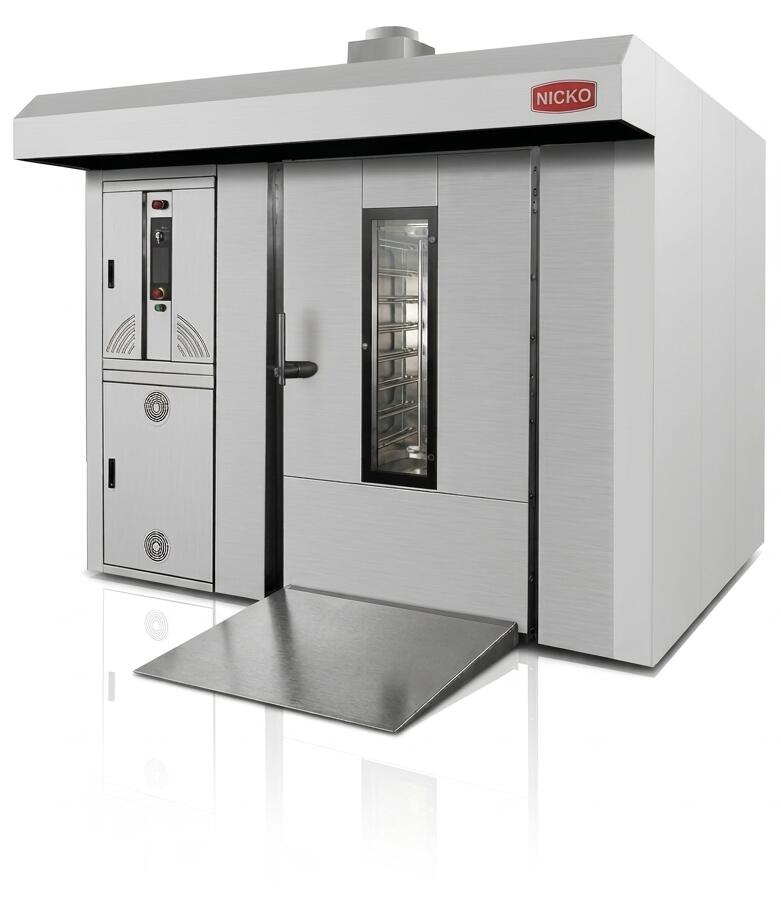
User-friendly in operation, the units come equipped with multiple industrial-grade safety protections including overheat and earth leakage safeguards. Boasting outstanding reliability, large throughput and superior energy efficiency, they stand as the top choice for commercial kitchens looking to scale production and elevate baked goods quality.